BOMA Manitoba members discuss the growing gap between service expectations and the resources available to meet them.
By Maya Wisher
C
ommercial property management is becoming a faster business, but not a simpler one. Owners and tenants have access to more information and expect timely answers. New technology is helping property teams respond, but experienced people are still needed to interpret the information and decide what happens next.
To look more closely at how the industry is responding, BOMA Manitoba spoke with Graham Bialek, Regional Manager, Operations, overseeing Kildonan Place, Grant Park, Sunridge and Peter Pond; Robin Hardman, General Manager, Real Estate Management at BGO; and Darren Klassen, CEO of Concordia Wellness Projects. Although they work
with different property types and operating models, all three see increased pressure on teams to deliver more with the resources they have.
“Years ago, things moved at a slower pace,” says Hardman. “Now results need to be near immediate. That isn’t easy to keep up with.”
That faster pace comes as staffing costs continue to rise and experienced professionals remain difficult to find. But staffing is only part of the issue. Competitive fees and changing lease negotiations also affect what can realistically be delivered within a service agreement.
The challenge is making sure expectations for a property match the resources available to meet them.
Years ago, things moved at a slower pace, now results need to be near immediate. That isn’t easy to keep up with.”
— Robin Hardman
The Cost of Delivering the Work
In third-party property management, the resources assigned to a building are closely tied to the fee an owner pays. That fee needs to cover the cost of delivering the service as well as the management company’s overhead. In a competitive market, there is pressure to keep it low, even as the cost of employing experienced staff continues to rise.
Klassen’s perspective is shaped by years of managing both private-sector and government assets. Before joining Concordia Wellness Projects, he spent more than a decade as a vice-president with Colliers, following earlier work with SNC-Lavalin O&M. Over that time, he saw staffing costs for some positions rise considerably, while the revenue available to support those roles did not keep pace.
“There’s an expectation of property management teams to maximize efficiencies and be more productive,” he says. “Doing more with what you have without necessarily touching head counts.”
Lease provisions can tighten the available budget even more. Management fees that traditionally have been included in the operating expenses recovered from tenants are no longer a given.
“More and more, reduction or exclusion of management fees is a big part of lease negotiation – the “cost of doing the deal,” says Klassen. There may be good business reasons for accepting a tenant’s terms, particularly when the owner is trying to secure an important lease. As a part of the management fee, tenants may cover the direct staffing costs but not anything related to other costs such as management or overhead.
“It creates a real challenge for both owner and manager, where one or both are faced with the prospect of absorbing the reduction in revenue,” Klassen explains. In some cases, a different arrangement may provide a solution.
For Bialek, this is one example of why operating a shopping centre requires specialized commercial knowledge.
“Commercial property management adds the complexity of understanding the intertwining of individual tenant leases — sometimes hundreds — and the flow of common area maintenance charges through those leases,” Bialek says.
For a management company, this creates a difficult line to hold. A lower fee may make a proposal more competitive, but it might also leave fewer resources available to meet expectations.
“There are some properties where you just say, ‘This is the fee. We can’t do it for less,’” Klassen explains. “If we do it for less, the service and quality is going to suffer because we can’t resource it properly. It’s a tough reality because no one likes to turn down work, but sometimes there is no other option. Fortunately, many owners understand that margins can be tight and are willing to partner, so ultimately the arrangement can be a win-win.”
The same staffing model or level of service will not fit every property. A smaller private owner will have different needs than an institutional client. The right approach depends on the property and what the owner expects the team to deliver. Being clear about that from the start ensures that the service and available budget match up.
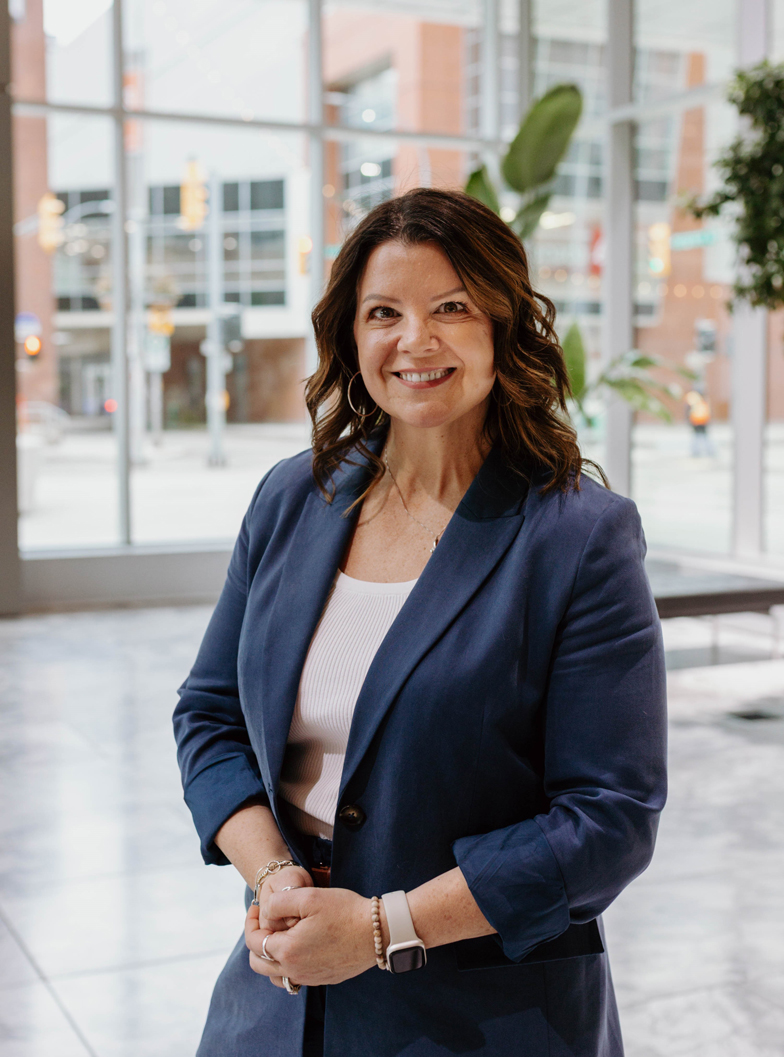
RAPID-FIRE WITH Robin Hardman
General Manager, Real Estate Management at BGO
In three words, describe property management in 2026.
Essential and people centric.
What’s one building feature you think every new development should include?
Climate and extreme weather resilience.
What’s one piece of advice you’d give someone entering the profession today?
Learn and educate yourself. Make sure you have a mentor, ask as many questions as you need to.
Experience Takes Time to Build
A job posting can bring in plenty of applicants, but finding someone with the right commercial property experience is another matter.
Bialek’s experience is part of a much larger national portfolio. Primaris is Canada’s only REIT focused solely on enclosed shopping centres, with properties across the country valued at approximately $5.2 billion.
Working effectively with tenants, contractors, ownership groups, municipalities and internal teams is essential to achieving positive outcomes for the property.
— Graham Bialek
“Over the past two years, I have led recruitment efforts for three leadership roles in three separate markets and consistently faced difficulties sourcing suitable candidates,” Bialek says. “Even in the most successful search, it took four months to secure a qualified replacement.”
Each position required a creative approach. In some cases, Bialek looked at relocation opportunities. In others, he considered people from outside the industry who had strong leadership skills and experience that could carry over into the role.
The difficulty is partly tied to the scope of the job, which can be much broader than candidates coming from other industries may expect.
“We are running businesses worth millions of dollars, managing complex building systems, leading teams, overseeing capital investments and financial outcomes,” Hardman says. “We juggle the needs of the owner, tenants and the public all at the same time.”
That breadth creates opportunities to bring people into the field through different routes. It also means that even strong candidates need time to learn the industry and the individual properties they manage.
The difference between an experienced team and one that is still learning can also be seen in the time required to complete the work.
“If you have a highly functioning team that has a lot of experience, they’re going to be considerably more efficient,” Klassen says. “So, as a manger it is up to you to be patient, provide the tools, resources, and support to help the less experienced gain confidence so they can be successful and ultimately flourish.”
For Bialek, recruitment is only one part of addressing the limited pool of qualified candidates.
“A deliberate commitment to mentorship, training and knowledge transfer will help ensure the industry has a strong pipeline of future leaders,” he says.
Building that pipeline requires employers to look beyond filling an immediate vacancy. It means giving promising employees practical experience while seasoned professionals are still available to support them.
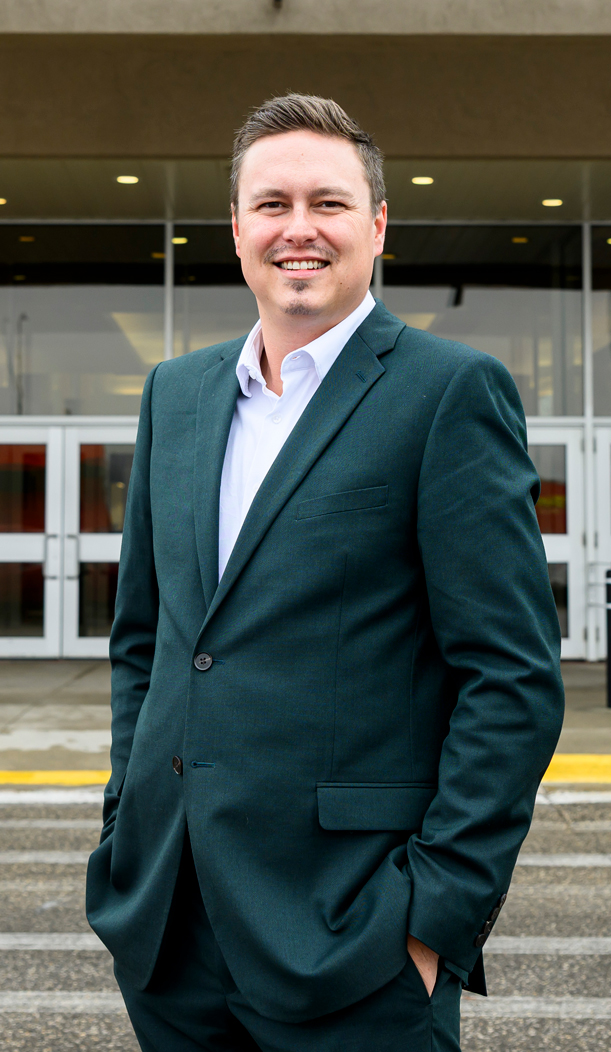
RAPID-FIRE WITH Graham Bialek
Regional Manager, Operations, overseeing Kildonan Place, Grant Park, Sunridge & Peter Pond
In three words, describe property management in 2026.
Resilient. Adaptive. Collaborative.
What’s one building feature you think every new development should include?
Sustainability initiatives focused on driving asset value such as digital metering systems and zero waste food courts which reduce energy consumption and waste removal expenses (increasing diversion).
What’s one piece of advice you’d give someone entering the profession today?
Being willing to learn, taking initiative and having a positive attitude mean more than you think it does.
The Effect on People & Properties
Hardman has spent years overseeing real estate in downtown Winnipeg. Her responsibilities at BGO now include management of True North Square, one of the city’s most prominent downtown properties, which anchors the Sports, Hospitality and Entertainment District (SHED). She’s also had the benefit of gaining cross-country industry insights and perspectives through her role as President of the Real Estate Institute of Canada.
The industry veteran describes the downward spiral that can occur when too much pressure is put on property management teams. “Qualified professionals become less efficient, operations become reactive, tenants become unhappy, costs increase and buildings lose value,” she says.
Those effects may take time to become apparent, especially when employees make up the difference by working longer hours. Klassen says property managers may place added pressure on themselves because they care about the quality of service they provide.
Property management has always been about people. It’s about buildings, but it really comes down to people.
— Darren Klassen
“Every property manager wants to do a great job. They want to deliver exceptional service, but there are only so many hours in the day,” he says. “You feel disappointed that you can’t provide the level of service that your clients deserve, or that you want to provide to them.”
The volume of work is only part of that pressure. Property managers also spend much of their time working with people whose priorities do not always align.
“I did not expect relationship management to become such a significant part of the role,” Bialek says. “Working effectively with tenants, contractors, ownership groups, municipalities and internal teams is essential to achieving positive outcomes for the property.”
Deciding what requires attention first calls for experience and judgment. A request that matters greatly to one tenant may need to be weighed against the owner’s plans for the property or work already underway elsewhere in the building.
For Hardman, supporting the people responsible for those decisions has become a larger part of leadership than she once expected.
“Prioritizing the mental health and well-being of my team has become an important part of my job,” she says. “It’s a high-pressure profession and always has been.”
Finding ways to ease that pressure also means taking a closer look at how the work is done.

RAPID-FIRE WITH Darren Klassen
CEO of Concordia Wellness Projects
In three words, describe property management in 2026.
Fast-paced and rewarding.
What’s one industry buzzword you’d happily retire?
This is an easy one: Flight to quality. It explains the concept well, but it is very overused. Somebody needs to come up with a new way of saying it.
What’s one thing people underestimate about property management?
It is so much more than just collecting rent and fixing buildings. You learn an enormous amount, and much of that knowledge can be transferred to other roles and industries.
Finding Better Ways to Work
“What is really adding value, and what is not adding value?” Klassen asks. “We can and should be very focused on checking the boxes, but sometimes it might be worthwhile to take a step back and look at the bigger picture and have an honest conversation about what really matters.”
He points to management reports as one example. They may be required as part of a contract but can take considerable time to prepare.
“Maybe there is an opportunity to trim the length of the report and the amount of detail,” he says. “Make it more meaningful and value- added. You can be more efficient in that way.”
For Bialek, improved ERP systems have made important property information easier to access.