Navigating Change in Winnipeg’s Multi-Family Sector
by Maya Wisher
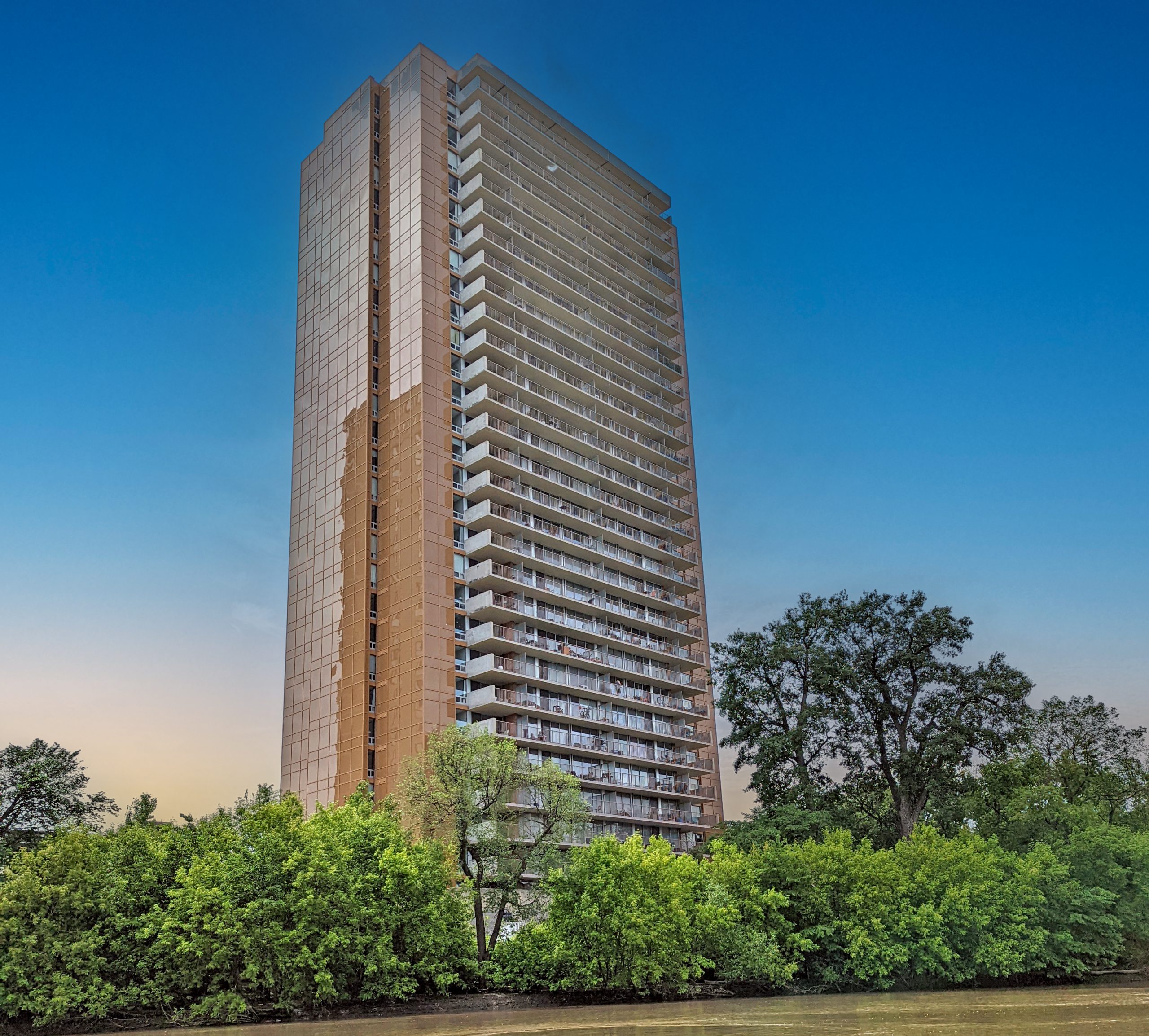
For years, Winnipeg’s multi-residential market was defined by strong construction activity and exceptionally low vacancy. Now, conditions are beginning to change.
Much of the city’s recent apartment growth has been concentrated in and around the downtown core, with new development reshaping areas like Waterfront Drive and the Exchange District, along with a growing number of projects near some of the city’s busiest routes. Neighbourhoods including Fort Garry, St. James, and West Kildonan have continued adding rental inventory as governments and developers pushed to expand housing supply across the province.
According to CMHC’s 2025 Rental Market Report, Winnipeg’s apartment vacancy rate rose to 2.8% as new supply outpaced demand growth. Incentives are beginning to return in newer buildings, and landlords are once again facing more competition for tenants after years of exceptionally tight market conditions.
Manitoba’s proposed rent regulation changes under Bill 13 have added another layer of uncertainty for owners, developers, and property managers. Among the proposed changes are plans to expand the number of units subject to rent regulation by increasing the monthly exemption threshold from $1,670 to $2,000, while also reducing the portion of capital improvement costs landlords can recover through above-guideline rent increase regulations by 50 per cent.
While the Province says the legislation is intended to strengthen tenant protections and improve affordability, many in the industry argue the changes could affect future reinvestment and development decisions at a time when governments are also calling for more housing construction.
BOMA Manitoba spoke with three companies operating in different parts of the multi-residential industry — Shindico Realty, Carrington Real Estate Services, and Ladco Company Limited — to better understand how current conditions and proposed policy changes are shaping confidence and long-term planning across Winnipeg’s rental housing sector.
Shindico Realty:
“If you want lower rents, you need supply.”
With more than 50 years in business and roughly $2.7 billion in assets under management, Shindico Realty has become one of Manitoba’s largest privately owned real estate firms. The company manages more than 160 properties across Canada, with a focus on Manitoba, including approximately 2,000 residential units.
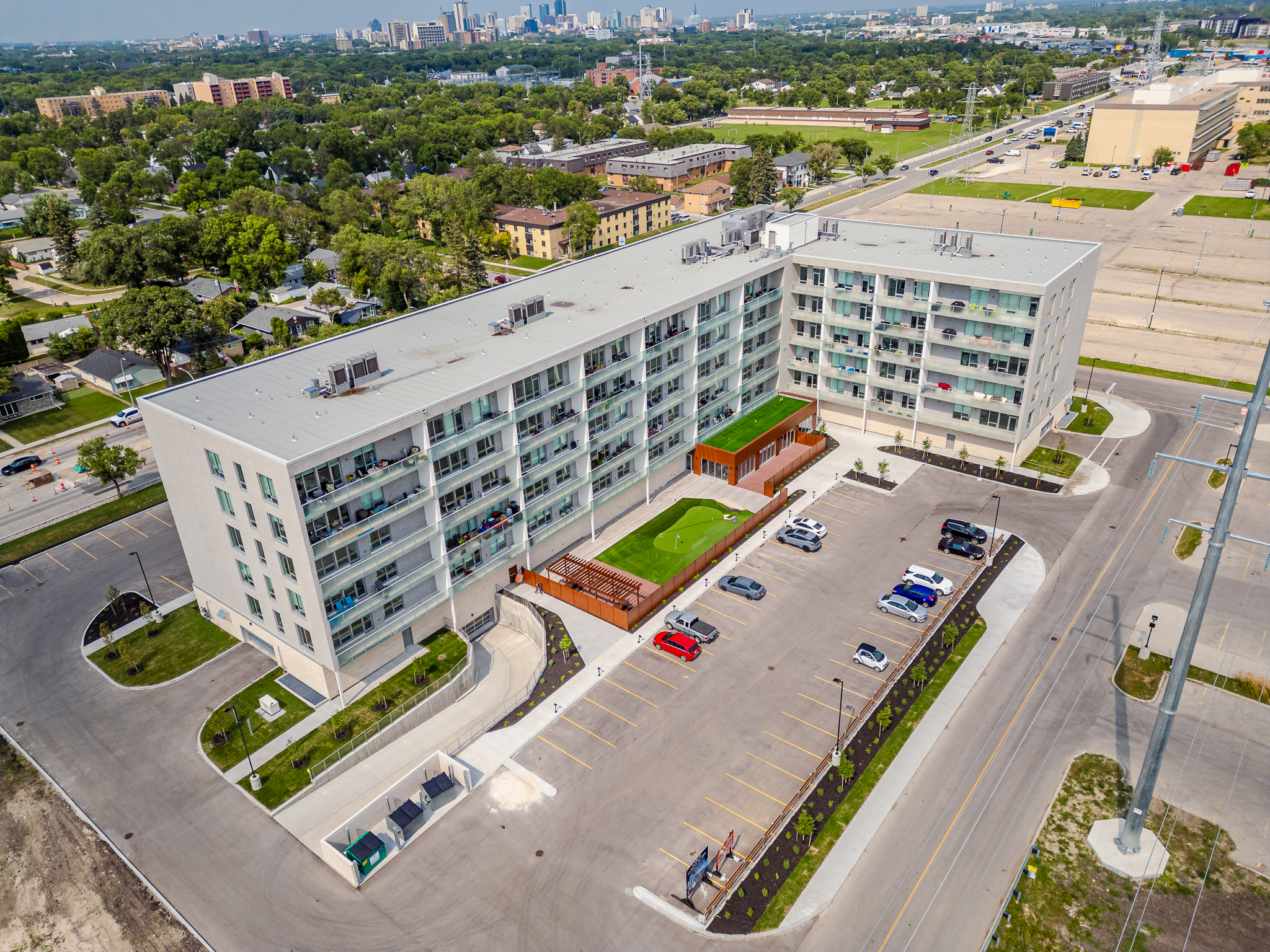
In recent years, Shindico has continued expanding its presence in Winnipeg’s rental sector through developments such as the Taylor Residences near Grant Park, where additional residential expansion remains planned alongside the broader Grant Park Pavilions development.
Despite sustained construction activity, Chief Operating Officer Alex Akman says leasing conditions have become more competitive in parts of the city, particularly near the University of Manitoba, where demand has cooled alongside a steep decline in international student arrivals. Federal caps on study permits and stricter visa regulations have significantly reduced foreign enrolment nationally — a 40% drop in Manitoba — with the effects now being felt across Winnipeg’s post-secondary and rental markets.
“Anything around there right now is pretty tricky,” he says. “Our building is $1,450 or $1,500 for a two-bedroom with all utilities included, and it’s still tough, so I can only imagine if you’re over two grand a month.”
Even so, demand remains strong for well-positioned projects. Shindico’s Taylor Avenue developments continue to maintain strong leasing interest, including a new 54-unit apartment building currently under construction.
“We are long term owners and investors, and the Bill creates a lot of uncertainty as it relates to a 20+ year investment, so we are actively exploring more investment opportunities outside of Manitoba including in Alberta, in Ontario and in the USA.”
-Alex Akman, COO, Shindico
“There’s a lot of demand for what I would say is the right product in the right location,” he says.
Renters, he adds, have also become far more selective about building quality and construction type. “One of the first questions people ask now is whether the building is concrete or wood. That just wasn’t previously the case.”
While Shindico continues moving ahead with projects on land it already owns, Akman explains the proposed rent regulation changes under Bill 13 have dramatically changed how the company views future multi-residential acquisitions in Manitoba.
“We are long term owners and investors, and the Bill creates a lot of uncertainty as it relates to a 20+ year investment, so we are actively exploring more investment opportunities outside of Manitoba including in Alberta, in Ontario and in the USA.”
That hesitation is not limited to new development. For Akman, it also raises questions about what is needed to keep older rental housing viable over the long term, particularly as Bill 13 proposes reducing the amount owners can recover through above-guideline rent increases tied to capital improvements and renovations. “Buildings get renovated, or they get taken down or condemned,” he says. “If you don’t have that incentive to renovate or keep them up, you’ll never replace those units.”
In cities such as Toronto and Vancouver, there have been purpose-built condominiums getting constructed, with owners then renting out the spaces as apartments.
“The best way to lower rent is to have vacancy, and to have vacancy, you need to have supply.”
-Alex Akman, COO, Shindico
“Winnipeg is a little bit unique compared to other Canadian cities in that there is no condo market,” Akman says. Winnipeg doesn’t have the same condo investor market seen in other major cities, which has kept more pressure on the rental market and vacancy rates lower.
“The best way to lower rent is to have vacancy, and to have vacancy, you need to have supply.”
He points to the years immediately before the pandemic, when higher vacancy and a growing number of newly completed units created stronger competition between landlords.
“There were promotions in the market and people were offering incentives on new builds because they had to.”
For now, the uncertainty brought on by Bill 13 is shaping how Shindico looks at future opportunities. As Akman explains, “We’re not in a position to underwrite Winnipeg multi-family right now until more clarity is achieved as it relates to Bill 13.”
Carrington Real Estate Services:
“Competition is good for tenants.”
Founded in 2018, Carrington Real Estate Services has expanded quickly within Winnipeg’s rental housing sector through a series of mid-rise and high-rise apartments. The company currently manages several newly-built residential properties with 350 units, while additional projects continue through construction and plan to add another 1,500 units soon.
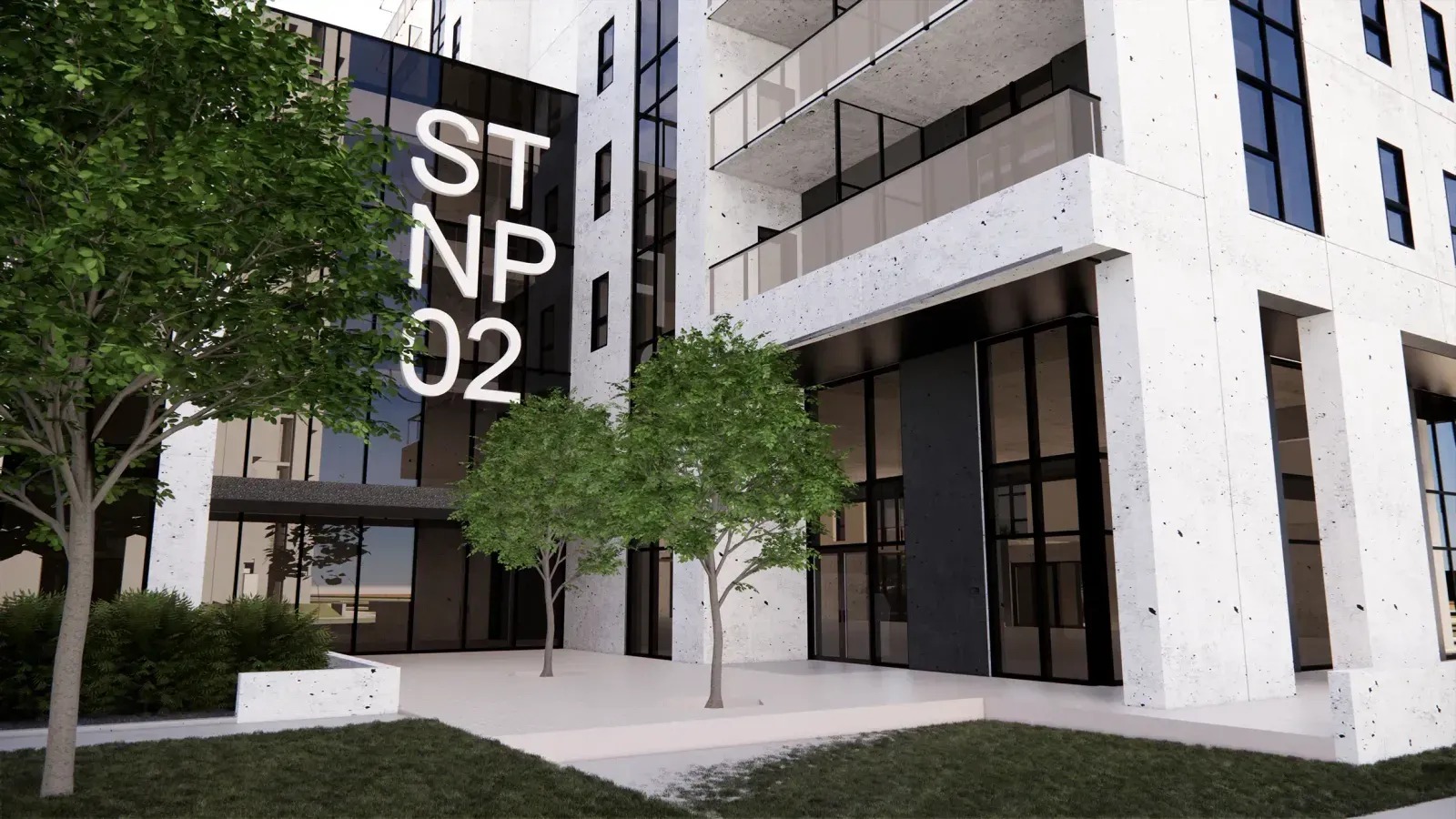
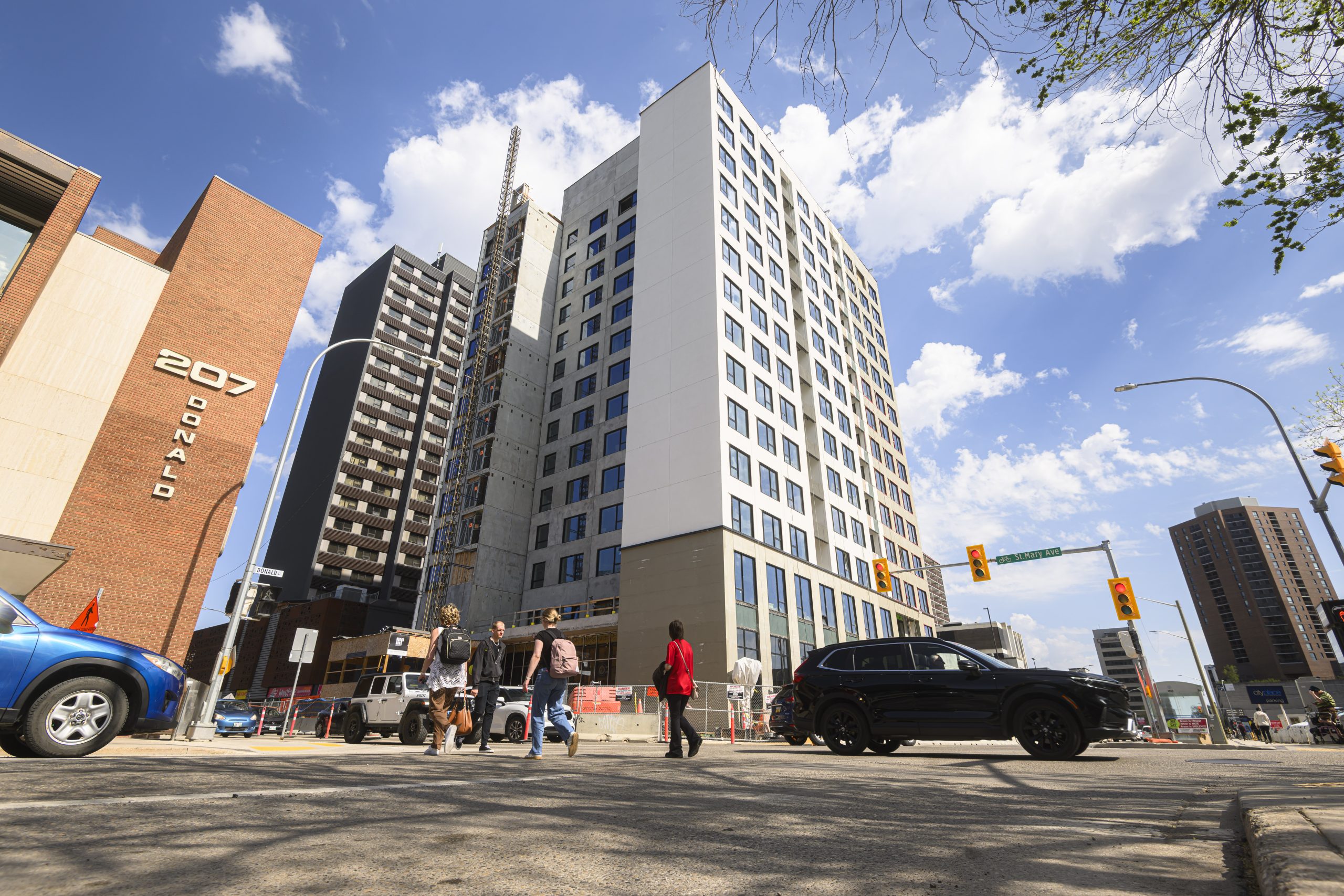 Among them is DSM, a 14-storey mixed-use tower at Donald Street and St. Mary Avenue that will add 160 residential units to downtown Winnipeg once complete. Carrington is also working on STNP01, a 156- unit project near the city’s rapid transit corridor in Fort Rouge, along with several other multi-family sites underway across the city.
Because many of Carrington’s buildings are newer projects, much of the portfolio falls within Manitoba’s exemption period for newly constructed rental housing under existing rent regulation rules. That has given the company a somewhat different perspective on the conversation surrounding Bill 13.
“I think it will inevitably increase rent, so it will do the thing you don’t want it to do.”
-Paul David, COO, Carrington Real Estate Services
Chief Operating Officer Paul Davis says landlords are beginning to compete more actively for tenants again after years of extremely tight vacancy conditions.
“When you have a market that has very little competition, you can kind of do whatever you want with pricing because there’s nowhere else to go,” Davis explains. “Your staff becomes complacent. You stop thinking about customer service because if somebody leaves, there’s twenty other people waiting for the unit.”
Those changing conditions are beginning to affect how buildings attract and retain tenants. “Free parking here, a free month there, rents staying flatter,” Davis says. “I think that’s fantastic for people.”
Competition is also pushing operators to place greater emphasis on customer service, tenant communication, and overall resident experience as renters regain more options across the market. “Winnipeg had almost zero vacancy before. Now we’re close to three per cent,” he says.
Despite many of Carrington’s own buildings being exempt, Davis still believes the proposed legislation changes to rent regulation could discourage future rehabilitation and reinvestment activity over time.
“We’ve never stopped before, and we won’t this time. We figure it out, and we keep going.”
-Paul David, COO, Carrington Real Estate Services
“I think it will inevitably increase rent, so it will do the thing you don’t want it to do,” he says. “It starves out people wanting to go do rehab projects and fix things to make them better.”
Still, Davis views uncertainty and changing market conditions as part of operating within the industry.
“There are always external factors that play into things — tariffs, pandemics, all those aspects,” he says. “People get hyper-focused on these items, but they’re part of being in the business.”
Even with the current challenges, Davis remains optimistic about the sector’s long-term outlook.
“We’ve never stopped before, and we won’t this time,” he assures. “We figure it out, and we keep going.”
According to Davis, public perceptions of developers often overlook the important role new housing supply plays in the market. “Developers are seen as money grabbers,” he says. “The reality is, they should be seen as problem solvers.”
Ladco Company Limited
“The market is in a bit of a holding pattern.”
Founded in 1919, Ladco Company Limited manages nearly 1,700 rental units across Winnipeg, many of them long-standing apartment buildings in neighbourhoods such as Osborne Village, Crescentwood, and St. Boniface.
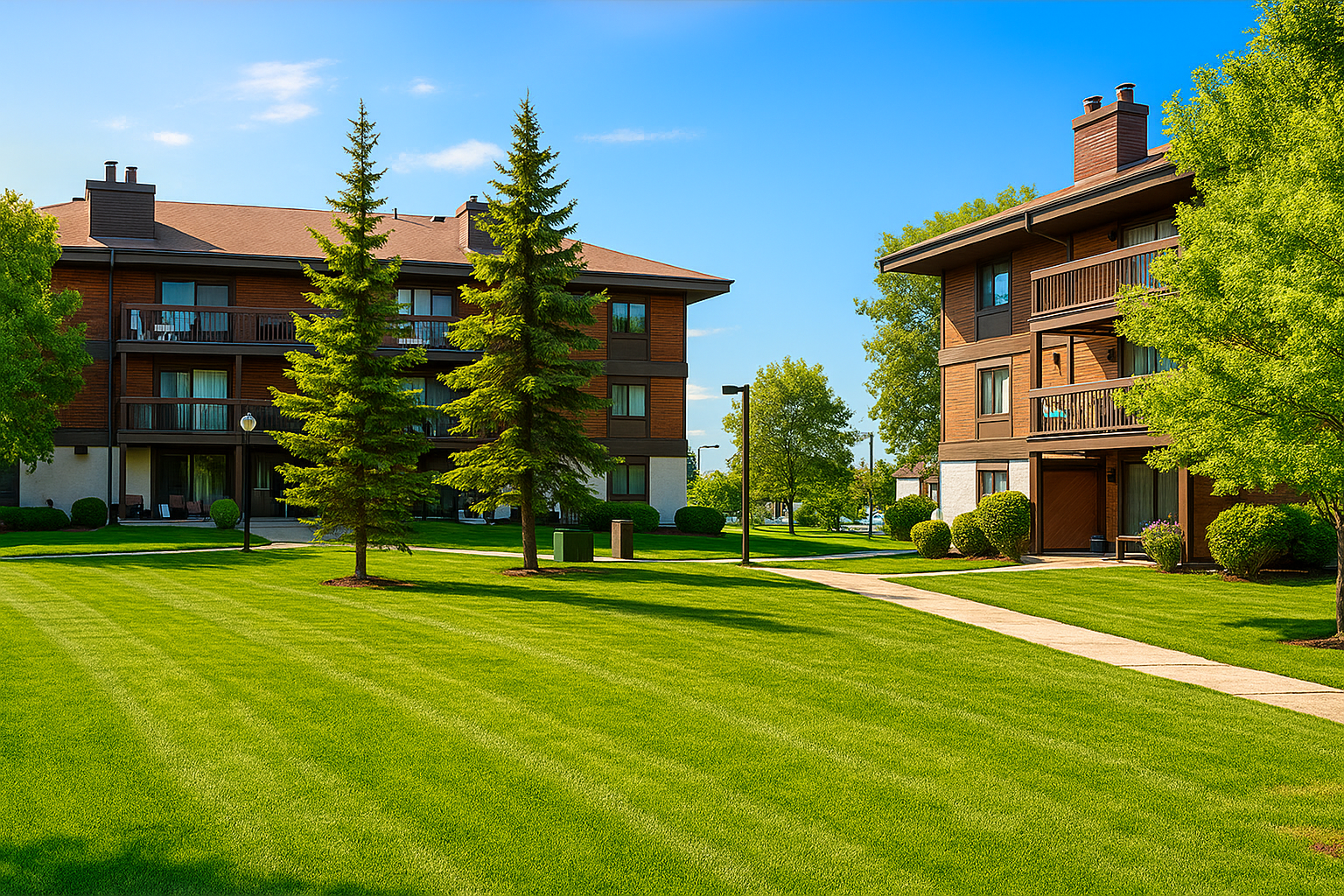 Ladco is not currently pursuing new apartment construction, instead focusing on maintaining and upgrading existing buildings across its portfolio, many of which are decades old and require ongoing reinvestment as they age. That includes major capital projects such as building envelope repairs, mechanical system upgrades, roofing work, and suite renovations.
Unlike new construction, many of those projects must be planned years in advance and carefully coordinated around occupied buildings, seasonal construction timelines, and long-term budgeting requirements. In Winnipeg, the city’s shorter construction season can make delays especially difficult to absorb.
“With Bill 13 still unresolved, we’re holding off on new capital decisions until there’s more certainty.”
-Jen Jacobsen, Director, Multi-Family Properties, Ladco Company Ltd.
“Two years ago, the returns on capital projects were easier to predict,” explains Jen Jacobsen, Director, Multi-Family Properties. “With Bill 13 still unresolved, we’re holding off on new capital decisions until there’s more certainty.”
According to Jacobsen, that uncertainty is beginning to influence decisions around larger-scale renovation and rehabilitation projects, particularly within older apartment properties. “And in Winnipeg, that’s especially challenging,” she says. “Delays quickly translate into higher costs and added strain on buildings.”
She adds that the proposed regulations are also raising concerns for owners and investors focused on acquiring and improving older rental stock — something that has long been an important part of renewing Winnipeg’s aging inventory.
“Other developers are concerned, especially those who would buy older buildings, fix them up and rent them to interested tenants,” she says. “These investments make less sense with the proposed regulations.”
At the same time, competition for renters is starting to increase in parts of Winnipeg. “With more supply and slower immigration, vacancy is a growing challenge city-wide,” Jacobsen says. “Filling units while maintaining current rents is increasingly difficult.”
“These investments make less sense with the proposed regulations.”
-Jen Jacobsen, Director, Multi-Family Properties, Ladco Company Ltd.
Still, Jacobsen says she does not see Winnipeg’s rental market as unstable. Instead, she believes the industry is moving into a period where it may simply take time for the market to absorb the amount of new inventory added over the past several years.
“Winnipeg’s multi-family market is in a bit of a holding pattern,” she says, “with steady demand but growing caution around supply and policy uncertainty.”
A Market in Transition
Despite operating in different parts of Winnipeg’s rental housing market, all three BOMA member companies pointed to the same growing tension: How to continue adding new housing while maintaining the stability needed to support ongoing reinvestment.
Winnipeg’s rental market is also beginning to look very different from the one that defined much of the past decade. Vacancy is on the rise, and landlords are once again competing more actively for tenants after years of exceptionally tight supply. At the same time, uncertainty surrounding future regulation continues to influence how owners, developers, and investors view long-term apartment investment in Manitoba.